Hard to tell from the photo, but take my word that this couple is saying wedding vows with a minister:
14 May 2008
Kids Olympics Saturday
All kids ages 6-12 are invited to our FREE event this weekend. Children will enjoy face painting, indoor and outdoor games, crafts, dancing, a petting zoo, safety activities and can meet mounted police officers. The event is at the Lincoln Community Center in the West End from 10 am - 3 pm. You can get more information and register children at Give Back Cincinnati.
13 May 2008
Fountain Square Movies Start Saturday
They return this weekend in connection with Reds related events:
... seven “Reds Hot Weekend” celebrations from May to September. The first “Reds Hot Weekend” is THIS WEEKEND, May 16-18 when the Cincinnati Reds take on the Cleveland Indians at Great American Ball Park.
“Reds Hot Weekends” begin this Friday night with live music by Lo-fi, a local cover band playing funk and rock classics, at 5 p.m. on Fountain Square. Local Reds fans and visitors in town for the games can meet, mingle and gear up for the series before heading down to the ballpark for the 7:10 p.m. game.
And if you don’t have a ticket for Saturday’s game, kick back on the Square all afternoon, listening to music and watching the 3:55 p.m. game on the giant video board. Then stick around for “Movie Night.” At 7:30 p.m. every Saturday through Labor Day, the Square’s popular “Movie Night” returns starting this Saturday with two baseball-themed movies “Sandlot” and “The Natural.” (Feel free to bring chairs, blankets, pillows and snacks for Movie Nights, but leave pets and alcoholic beverages at home. Beer, soft drinks and snacks will be sold on the Square.)
Then on Sunday “Reds Hot Weekends” continue on the Square following the 1:15 p.m. Cleveland Indians series finale. After the game, the Reds Rover vehicle will be parked on the Square along with the United Dairy Farmer old fashioned ice cream truck. Reds mascot Gapper will be on hand to help hand out free UDF ice cream from about 4:30-5:30 p.m.
“Reds Hot Weekends” include the following series:
May 30-June 1 -vs- Atlanta Braves
June 13-15 -vs- Boston Red Sox
July 18-20 -vs- New York Mets
July 25-27 -vs- Colorado Rockies
August 15-17 -vs- St. Louis Cardinals
Sept. 5-7 -vs- Chicago Cubs
I just googled Gapper to see what it was... (I'm not much of a baseball fan)
Enright Ridge Ecovillage Tour Sunday
I have heard about Imago for years, and I think finally I will visit this weekend:
Enright Ecovillage Google map
Cheap Eats for Kids Downtown
Where can a family go for an affordable dinner out at 7pm on a Saturday downtown? I'm thinking pizzeria type food and atmosphere. If we drive to Clifton there is Dewey's, Pomi's, and a few other spots that are pretty kid friendly. Downtown, not much. Most cheap eats are closed completely on weekends, and some that are open on Saturday, close by 4pm (Potbelly's, Skyline). Even our only fast food place downtown (Arbys) is closed by then. The food at Rock Bottom is terrible, IMO and I will never go there again if I am paying. We've done some of the nicer places, like Shanghai Mamas and others, but do kids really need $10 entrees? I think not. I've also tried Courtyard Cafe and Arnold's, which are fine, but not the best for kids.
Two places have worked for me in a pinch. First is Universal Grill. Although we are typically the only straight people there, and usually the only people with children, they do have mini hamburgers and fries, and decent beer for dad. In nice weather, you can sit outside on the sidewalk:
Second, Donatos. Last Saturday evening, I had 3 ragged kids with me and we needed cheap eats in a very casual atmosphere (kids were dirty and sweaty), and Donatos was the only place I could think of. The other pizza places downtown are carry-out only, Donatos, has a dozen tables, and although decidedly downscale and with no atmosphere the kids had a great time, and I spent under $20! ... Now that's what I'm talking about.
Rubber Clown Doll Quote
Do you know who I am? I'm the big rubber clown doll you had as a kid, and every time you hit it, it bounces back. That's me--the harder you hit me, the faster I come back up.-Bill Clinton to Newt Gingrich, Winter 1995
12 May 2008
A Vistitor's View of Cincy
I'm interested in how a visitor sees Cincinnati. This time, an Indianapolis native gives his perspective:
There is simply not a city in the Midwest apart from Chicago that has anything near the great assets of Cincy. It is an embarrassment of riches.
...
Drive around Cincinnati and you'll notice that much of the great architecture is in a shocking state of disrepair. While the buildings weren't wholesale cleared as part of the botched urban renewal movement, the city still has a sort of bombed out feel in many places.
...
it is interesting me that such an incredible place hasn't experienced one of America's great urban renaissances. I believe the potential is still there, albeit latent at the moment.
It just goes to show that ... cities are about people, not just buildings. All the great geography, architecture, etc. in the world isn't a sufficient condition to create a thriving, dynamic city.
...Many of the other great urban neighborhoods are best seen by car.
Bicycle Auto Park
This doesn't make much sense to me. The advantage of riding a bike is that you can go right to the front door with it, not park it a few blocks away in a garage. In Japanese:
Politicians Won't Tackle Sprawl
Editorial in the Cleveland Free Times:
... no candidate running this year is going to upset or even challenge the suburban sprawl industry.
... a bipartisan commitment to avoiding any talk about reining in the immense power of the real-estate industry.
... long-avoided discussions America ought to have on race, on climate change, on imported energy, on highway construction and on agriculture will all continue to lack a certain element of reality.
... Obama is the only candidate who is speaking about Urban America. But he is speaking within the bounds of the 1960s paradigm about cities. His talk is all about the poverty of the deserted minorities of central cities, and not about the huge countervailing incentives ...
11 May 2008
Transportation Crossroads
We need an Eisenhower for today's crisis:
The collapse of the Interstate 35W bridge in Minneapolis last August points to a fundamental crisis. Transportation systems and structures are outmoded and stressed beyond their capacities. This is not an abstraction; we suffer the consequences during our commutes every day. Traffic congestion in 2005 drained $78 billion from our economy,... adding 4.2 billion hours to Americans' commutes while wasting 2.9 billion gallons of gasoline.
...Yet the federal government clings to a backward funding formula: The more a state's residents drive, the more money that state receives.
...Transportation costs, now the second-highest household expense, are pricing families out of the American dream -- preventing them from saving, buying homes or investing in their children's educations.
....A half-century has passed since President Dwight Eisenhower signed the legislation establishing the United States' interstate highway system. That was among the most daring ideas of its time. It was a road map for the infrastructure that enabled 50 years of unrivaled economic prosperity and opportunity. Today, we must again dare to think and act boldly, but in a different way, because the world has dramatically changed.
10 May 2008
Gas Prices Increase Transit Ridership
Some cities with long-established public transit systems, like New York and Boston, have seen increases in ridership of 5 percent or more so far this year. But the biggest surges — of 10 to 15 percent or more over last year — are occurring in many metropolitan areas in the South and West where the driving culture is strongest and bus and rail lines are more limited.
Nobody believed that people would actually give up their cars to ride public transportation,” said Joseph J. Giulietti, executive director of the authority. “But in the last year, and last several months in particular, we have seen exactly that.”
Times Change
For those of you not on John Schneider's protransit email list, I had to pass this along:
Gas pushes above $3.67 a gallon, while oil passes $126 on Venezuela supply concerns
And the Cincinnati backstory is ...
At $126, a barrel of oil now costs $100 more than it cost on November 5, 2002 when Hamilton County voters defeated an extensive plan for transportation choices here. Economists hired to study the plan concluded that it would cost an average Hamilton County family $68 per year, about what I paid for a tank of gas last week.
The plan defeated in 2002 would have built sixty miles of light rail in five corridors: along I-74 to Green Township; I-75 to Tri-County; I-71 to Blue Ash; and a line from Uptown through Hyde Park to Newtown. Another rail line would have enabled Cincinnatians to travel across the county without having to go downtown and transfer. There were two streetcar lines, a 25% increase in the bus fleet, new bus routes and neighborhood hubs and more hours of bus service. When the plan was fully built-out by 2030, 95% of Hamilton County residents would have transit within a mile of their homes. It would be nice to have that option now.
The first line to be built, the Northeast Corridor, would have linked Downtown with Uptown, Xavier and Blue Ash on a route roughly parallel to I-71. At the time of the Hamilton County vote in 2002, the Federal Transit Administration rated the expected performance of the Northeast Corridor project to be equal to similar rail project planned for Norfolk. Neither city's project was recommended to receive Federal funds at that time because Cincinnati and Norfolk hadn't yet agreed to match a Federal commitment with local funds. At the time of the vote here, rail opponents waved the bloody shirt of Cincinnati's "Not Recommended" rating as proof of our project's unworthiness. The plain truth was, and is, the Feds won't commit any money for rail projects unless the locals do. As it should be.
Cincinnati said no. Norfolk said yes, got its Federal commitment, and its project is now under construction.
As we ponder a breathtaking 500% rise in the price of oil in less than six years, maybe it's time to start planning for a balanced transportation system here once again. Building the Cincinnati Streetcar is a start.
09 May 2008
The Worst Sidewalk Downtown
[where: 13 E. Thirteenth Street, Cincinnati, OH 45202]
(SW corner of Thirteenth and Jackson, 1227 Jackson ie: Jackson Street Warehouse is the owner responsible)
08 May 2008
Visual Lingual
A neighbor of ours has a great post today about choosing her environment. I definitely feel affinity for her decision process. My life, where I live and how, is made from innumerable small steps and everyday decisions. It was not planned out in advance, but the result is pretty good. Read her post.
Does This Man Live on Fountain Square?
Basil Sturgill? I don't think so, but that is the address he gave the sheriff when he registered as a sexual offender last week. He probably just got out of jail and had no idea what else to tell them when asked where he is going to live... I've seen other men list their cars, or even the sidewalk....
Walkable is In
Nothing gets the point across better than a simple drawing like this by the New Urbanists:
On the subject of walkability... no other mode of transport compares in ease or pleasure. A few days ago our family took a nice bike ride to Newport. The ride was a lot of fun, but I was struck how much more complicated and difficult it was than our usual walk to the Library or Fountain Square. You can't really carry a conversation while biking, and one kid requires a special seat with a seatbelt, both require helmets that they have trouble with, add some mechanical difficulties, and then trying to park them in a safe spot and carrying the helmets around all adds up to a strained day. Really, nothing beats a walk.
William Steig
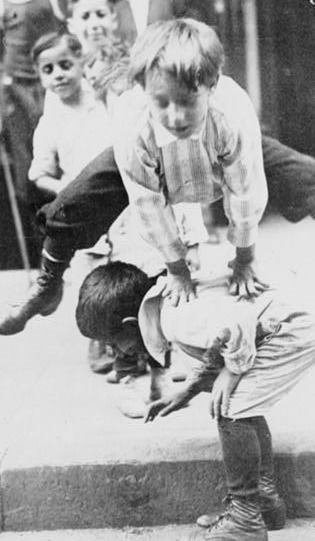
Boy and Dog Drawing
See the William Steig webpage. He is the author of The Amazing Bone, Dr. DeSoto, Sylvester and the Magic Pebble and many other great children's books.
07 May 2008
UC Initiative to Reduce Violent Crime
I thought this article was interesting and am linking to it, because it is in the UC magazine, which probably doesn't have a big readership:
Researchers save lives by unlocking the street code in Cincinnati
... Dozens of young men filed into a downtown courtroom last summer. ...they were summoned as a condition of probation or parole to sit through a surprise "call-in session," ...Facing them was an assembly of men and women -- law enforcement officers, criminal justice workers, social service providers and community members --hellbent on convincing their captive audience to end the bloodshed.
Cops laid down new stiffer rules with federal sentences. Weary moms described burying sons. And social workers offered job training as a way out.
By the end of the tense session, the message seemed to penetrate. Dead stares at the wall and blank looks at the floor gave way to more respectful glances, even full attention. A few in the benches actually broke down in tears. And afterward, astonishingly, the phones started ringing from those who wanted out.
... most shocking was the sheer number ready to give up their hardened ways. Experts who had implemented similar initiatives in other cities cautioned Cincinnati to expect a handful, at best, to take such positive steps.
... "When they come into these call-ins they are tough. They have this street image -- like this is 'BS' or they can't be bothered.
"Then the mothers (of the dead) speak. And you can see them hang their heads. They know. They can't escape the honesty of what these people are saying. "You can see their tears, especially when they say to them, 'Don't let this be your mother. This is the pain that's left behind.'"
... UC researchers ... have developed social networking models that pinpoint 67 different violent street groups in the city. ... data now allows researchers to literally generate a map of bad guys and "who has a beef with whom."
... the majority of the Queen City's killings have more to do with respect than drugs. ... the community can curb the number of homicides by disrupting the group dynamic that promotes a violent response as the method for addressing disrespect.
... what seems to set the Cincinnati method apart is its "carrot." CIRV relies heavily on social services and the community to reach troubled men who need a way out.
... today, the London Metropolitan Police are implementing the Cincinnati model. Closer to home, UC researchers will soon use state funds to take the CIRV plan to eight cities across Ohio.
06 May 2008
Rude Preachers and Private Tents
Situation #1:
Should a preacher be allowed to preach in a public park?
Sure.
Can he use a loudspeaker? Without any kind of permit? How loud can he be? Can he curse all the people in the park to Hell? Can he play obnoxious music and sing a really bad version of "We Are the World"?
How would you like it, if in the public park by your house, this guy came every Saturday of the year and broadcast his message so loud so as not only to make the park unusable, but to wake your kids at bedtime?
That is the situation in Washington Park. Nothing deters this preacher. His response to complaints is that the park is his church, and the people in the park are his congregation.
I understand that during special events, the park may be filled with loud music and that this can be disruptive to those who live nearby. I can even understand that a festival for example can be held in the park, and that during that event, the park is not fully usable by the public. In my view it is the combination of the loudness and the ubiquitousness of his use, that makes him rude.
Situation #2:
Should a wedding party be allowed to rent a pavilion in a public park?
Of course. Many pavilions in neighborhood parks are specifically built for such use. A few years ago we attended a wedding at the pavilion in Ault Park, and it is used for such events throughout the summer. Of course the public is not invited to such events.
Situation #3:
Fountain Square:
This was an event for the organizers of the Flying Pig marathon. The general public was kept out of the tent. But, this is Fountain Square, not a neighborhood park. It should not be rented out like a pavilion at a neighborhood park.
However, this was for an event that is obviously beneficial for the city. I don't think a private business can fill the square with a tent (or can they)? This has become a contentious issue in NYC's Bryant Park.
In my opinion, private parties should be held in an adjacent hotel ballroom. Either that, or make it a public celebration in which everyone is invited.
I don't want to get into discussion about the First Amendment and Free Speech and Assembly, I just think that the key point of a public square, is that it is open to the public! People who use this public square must stay civil (relatively quiet) and events must be open to the general public. Tenting, or fencing-off areas for ticket-holders only, or holding events that are very loud, should be rare and should be minimally intrusive to the other users of the space.
Babysitter Options
A couple people have asked, and I have posted about this before, but it's been a while so here are two options to get babysitters:
Babysitease. Basically, this service guarantees to hook you up with a sitter for $8 an hour. There is a $50 registration fee, then you schedule the sits through their website and pay Babysitease $8 each time you schedule. Then you pay the sitter cash. We have done this several times and it has worked wonderfully. The only drawback is not really knowing who you will get as a sitter, but they have mostly been UC students and some have been excellent.
Mommy Mixer. I keep getting unwanted solicitations for this event wherein you meet potential sitters and get names and phone numbers. The next event is May 14 at 6pm. Cost is $50. We have never done this, but it might be worth a try for others.
Big Brothers Started in OTR
Did you know that the Big Brother Big Sister program was started in Over-the-Rhine in 1903?
The Big Brother movement was started in Cincinnati in 1903 by businessman Irv Westheimer. His idea to reach out to fatherless boys gained support in Cincinnati, then spread coast-to-coast and expanded to include young girls. There are now nearly 500 Big Brother Big Sister agencies in the United States.
It is a great program, and I had no idea it started here.
05 May 2008
Boris Johnson Quote
The new conservative mayor of London, tapping into a sentiment against modern ugly towers. He knows that most people prefer to live in neighborhoods of brick townhouses:
...promised to protect London's traditional and historic buildings and streets from bulldozers and skyscrapers.
Mr Johnson said he would assure Londoners that "their gardens, their views, their neighbourhoods are not going to be dwarfed by high rise blocks or engulfed in a sea of identikit homes.
"What the average Londoner wants is a house with a garden and a front door.
But when I look at some of the plans for the 27 phallocratic towers that Ken wants to erect in the suburbs, I wonder whether we have learned anything from the experience of the last 50 years.
"We seem to be in the grip of barbarians who are determined to knock down venerable buildings - Victorian police stations and swimming baths - and put drab blocks in their place.
"You can have more houses without wrecking the garden city of London."
Private Playstructures
The decline of public play is a theme of this blog. This author touched on this when trying to figure out why he disliked the plastic play structures so common in backyards:
Children's play equipment and the decline of the American yard
at Slate
...Lurking somewhere, either peeping out from the back or nakedly displayed right in front, some form of children's play equipment, typically in plastic and typically in some bright primary color, will probably be splayed on the grass.
I'd like to raise just one question about this picture of domestic bliss: How often do you actually see a child playing on, or near, one of these devices?
....the fear of injuries and their litigious consequences forced the closing, or banal "post-and-platform" retrofitting, of many playgrounds.
...
"Told incessantly to be mindful of lurking dangers and the people who might inhabit the outdoors, [paranoid] parents often defer trips to public spaces. Going to a playground becomes too exhausting for a parent to contemplate." And so instead of a communal play space, each yard becomes a (rarely used) playground unto itself.
....
.... "To a four-year-old, though, the space made by the vaulting branches of a forsythia is as grand as the inside of a cathedral, and there is room enough for a world between a lilac and a wall."
04 May 2008
Catalytic Converter Notice
I got this notice via the blockwatch group. My question, how do you know your catalytic converter has been stolen? Will there be muffler parts laying on the ground arouns your car?
In the event the catalytic converter is taken off your car
please do not move the car. Immediately call the police to
report the incident and they will dust the car for
fingerprints. The Cincinnati Police can be reached at
513.765.1212. If the police are not immediately available
to respond, please leave a contact number and your location
with the police dispatcher, for follow up investigation.
03 May 2008
A Candidate Finally Mentions Rail
An Obama quote from yesterday, as per Grist:
The irony is with the gas prices what they are, we should be expanding rail service. One of the things I have been talking about for awhile is high speed rail connecting all of these Midwest cities -- Indianapolis, Chicago, Milwaukee, Detroit, St. Louis. They are not that far away from each other. Because of how big of a hassle airlines are now. There are a lot of people if they had the choice, it takes you just about as much time if you had high speed rail to go the airport, park, take your shoes off.
This is something that we should be talking about a lot more. We are going to be having a lot of conversations this summer about gas prices. And it is a perfect time to start talk about why we don't have better rail service. We are the only advanced country in the world that doesn't have high speed rail. We just don't have it. And it works on the Northeast corridor. They would rather go from New York to Washington by train than they would by plane. It is a lot more reliable and it is a good way for us to start reducing how much gas we are using. It is a good story to tell.
Is he intent on losing the white suburban vote or with the current gas prices are they finally ready for other options?
02 May 2008
Vacant Buildings Again
More boarded-up buildings. These are on Pleasant Street south of Findlay Market, but north of Liberty (1600 Block)
Minority Swimming Gap
NEW YORK (AP) — Nearly 60 percent of African-American children can't swim, almost twice the figure for white children, according to a first-of-its-kind survey which USA Swimming hopes will strengthen its efforts to lower minority drowning rates and draw more blacks into the sport.
...Black children drown at a rate almost three times the overall rate. And less than 2 percent of USA Swimming's nearly 252,000 members who swim competitively year-round are black.
....The study also found that swimming ability, regardless of race, increased in relation to parents' income and education.
....Wanda Butts of Toledo, Ohio, is participating in the program. Her 16-year-old son, Josh, drowned last year in a lake as he played with friends on a raft despite his inability to swim.
...
Butts now travels periodically to preach the importance of learning to swim — in fact, she's taking lessons herself. She's also launched an initiative called the Josh Project, which ensures that lessons are free for families unable to afford them.
"The best way is to start the children as young as possible," she said.
They sure cannot learn to swim in a sprayground. See my other posts about swimming here.
Old Pool Photo
A photo of the old pool in Washington Park. I estimate the photo is from the 40's.
Interesting that there is no fence around the pool.
Shot of the same area earlier this year:
01 May 2008
Thick Skin Required in City
I posted a poem yesterday about the anonymous people we pass on the street each day, not because it was a great poem, but because it expressed an important sentiment about city life. Namely that we may not know each other, but we are important to each other.
Now depending on what neighborhood we are in and how well known we are in that neighborhood the dynamics of walking down the street can vary dramatically.
Having lived in my neighborhood for many years, it is hard for me to step out of the door without having to commence some small talk with a neighbor. Sometimes that is a joy, sometimes if I'm running late, it is annoying. I think one attribute of a great neighbor is their ability to show genuine friendliness without talking for a long time. Sometimes, just a wave is nice.
But the great majority of passersby on the street are complete strangers and of course this is more true the further away from home we are or the bigger the city. I think one thing that turns suburbanites off to the city life, is their inability to deal with strangers.
You don't need to be nice to every stranger. God knows they won't all be nice to you. Some people will even give you an evil eye or curse you. My advice is to have a thick skin. If someone is rude to you, do NOT take it personally, and do not respond in kind. Rude people are like other kinds of pollution, an irritant that you shouldn't let ruin your day.
One local blogger recently wrote about how many people he meets on the street who are friendly:
...I would nod my head and say "Hey, hows it goin?" If they acknowledge me with a response, a nod, anything but a cold stare, they went down on the "friendly" side of my counter. If they just walked by or ignored me, I clicked em in on the "unfriendly" side of the counter ... by the time I had hit Liberty, I had encountered 126 people, and had 71 positive responses. I had 5 conversations for a few minutes, and shook a few hands as well.
Gas Tax Holiday Follies
I try very hard not to talk about national politics. It just seems like a timewaster, and there are already thousands of voices on these issues. But this gas holiday thing is driving me crazy, and I cannot resist.
The McCain / Clinton proposal for a 3 month Federal Gas Tax Holiday is so stupid, so disrespectful of the soldiers who are risking their lives to bring us oil, that it makes my head hurt writing about it. It is pure pandering, and I think it speaks volumes about the character of the politicians proposing it.
I did an internet search and couldn't find anyone who supported the idea. A sampling:
Tom Freidman, Autopia, American Public Transportation Association, The Oil Drum, Economists call it stupid, NY Magazine calls it an Ominous preview of a McCain or Clinton presidency. James Fallows cant' believe the stupidity of it.
Freakonomics:
If any reader can find a coherent economist not affiliated with any of the major campaigns who thinks this is a good idea, then please add a link in the comments.
...we won’t find any economist willing to support this nonsense. Not a right-wing economist, not a left-wing economist, and not even a two-handed economist.
...the country is already 3.2 billion dollars behind on highway funds. Senator McCain's proposal would add $8.5 billion to that shortfall.
...
Projects across the board could be cut or put on hold. The American Road and Transportation Builders Association estimates more than 300,000 jobs could be at risk...
The Congressional Budget Office projects that the Highway Trust Fund, which finances the highway and public transit infrastructure, could become insolvent as early as next year. Senator McCain’s proposal will even further negatively impact the Highway Trust Fund, causing it to become insolvent even faster.
The federal gas tax has not been raised since October 1, 1993 but the demands on our roads and public transportation systems have continued to grow. Maintaining and expanding our transportation systems that meet the needs of our growing population is essential. The presidential candidates should be voicing their solutions for meeting the transportation needs of the future and dismissing any proposals, such as the “gas tax holiday” proposed by Senator McCain, that might be popular in the short-term but disruptive in the long term.