Showing posts with label streets. Show all posts

09 May 2008

The Worst Sidewalk Downtown


[where: 13 E. Thirteenth Street, Cincinnati, OH 45202]
(SW corner of Thirteenth and Jackson, 1227 Jackson ie: Jackson Street Warehouse is the owner responsible)

29 April 2008

Branching Patterns of Street Trees

An example below of a nice effect on Republic Street. However they are placed haphazardly, and I am not so fond of this species. Many of these Chinese Elms were planted in Cincinnati in the 1980s and 1990s. They were seen as a possible replacement for the American Elm, and they are very hardy. However, they are kinda short and stumpy, and in my opinion, not a great looking street tree. They seem to branch kinda low, and the branches seem to be bunched together. I think the Honey Locust, with its wide branching pattern is a better choice, among others.


Taller trees are better for even tight streets IMO. Taller trees in NYC:


Sycamore, or London Plane trees in Portland. These are the ideal street tree IMO if there is enough space, although sometimes they can also be found on very tight streets:


Not sure of the species here:
 

22 April 2008

Highway Bias

The New Republic has a blog post about the inequitable funding system of different transit methods:

...the federal government usually covers about 80-90 percent of the costs for a new highway project, compared with only 50 percent of the costs for a transit system. Local communities have to pick up most of the rest of the tab for public transportation, with state governments chipping in what's left. Since doing that usually requires raising property taxes, most local governments just prefer to build highways....

...transit projects have to undergo intensive scrutiny: a cost-benefit analysis, a land-use analysis, an environmental-impact analysis, and, usually, a detailed comparison among various alternatives. That all sounds pretty reasonable, except that highway projects don't have to undergo any of this....

Not surprisingly, most communities find it far easier to build new highways than to set up, say, a light-rail system....


Talk about infrastructure being underfunded, McCain and now Clinton are proposing we get rid of the gasoline tax for three months! Yeh, don't worry about repairing those old bridges....

14 March 2008

Complete Streets Article

I thought this first paragraph was relevant to the Edison film I posted a couple of days ago. In the film, the sidewalks were extremely wide. I'm sure if you went to that street today, you would see a standard 12' sidewalk with metered parking on both sides and the rest given to auto traffic speeding from stoplight to stoplight.

The first drivers in New York City found themselves in an unfriendly landscape. Cobbled streets, narrow roadbeds and a lack of traffic controls weren’t suited to expeditious movement by automobile. For a time, drivers contented themselves with carving out small niches in the urban fabric, but with money, political muscle and an aura of inevitability, the automobile lobby eventually brought about a program of wholesale curb-to-curb reconstruction. Up came the trolley tacks, down came the elevated trains, gone were the broad sidewalks of a great city of walkers — all in the name of a grand design. It was this street-by-street repurposing, just as much as the construction of highways, that reshaped New York’s streets around the car.
For four decades, activists for greener, safer NYC streets have scrounged at the margins of this automobilized streetscape. A few feet of traffic lanes converted to bike lanes, the occasional sidewalk extended to relieve a dangerous intersection — all important changes, but all within the context of streets that serve cars, first and foremost. But what would our streets look like if they were redesigned, building-to-building, to first accommodate walkers, bicyclists, the disabled and surface transit? The days of living at the margins are over: the Complete Streets revolution has begun.
....
A Complete Street is foremost a reapportioning of road space. Other than restrictions requiring 20 feet of roadbed for fire trucks, the space between buildings is malleable. At present, we give over the lion’s share to cars, usually with parking along either side and one or more lanes for travel in the center.
....
Today’s “incomplete” streets serve essentially one purpose: the expeditious movement of cars.
...
Understanding car traffic as part of a streetscape, and not its sole function, is the foundation of a Complete Street.
....
This type of design first serves the most vulnerable populations like seniors and children, and then builds the street from their needs up. Once a design has cultivated space where walkers and other non-drivers can move, it is time to create space for them to linger and interact.

....Returning the public space currently resting under parked cars and snarled traffic to the of service pedestrians, to walk or linger, is the last piece of the puzzle to making streets whole.

.... Sidewalks must be about more than moving pedestrians; they require space to sit, to comfortably walk side by side and to accommodate the disabled.

Read the whole Brooklyn Paper Editorial

11 March 2008

Busy City Street 107 Years Ago

Thomas Edison Film: What Happened on 23rd Street, NYC, August 21, 1901. I thought the way pedestrians owned the street was interesting. There are horses with carts and streetcars, mixing with jay-walking pedestrians.

07 March 2008

Good Living Downtown in Snowstorm

A great benefit to city life, is the ability to live your life without a car during a snowstorm. I love the deep snow. The city becomes quiet and beautiful. Snow is only a headache when you must drive in it.

I cannot understand why Cincinnati Public Schools did not cancel classes today. Last year during a mid-day storm like this it was very difficult getting the kids home from school.

This is also a good time to note that streetcars could provide a warm extension to our walkable area.

20 February 2008

Food Trucks

One sign that Portland is attitudinally different from Cincinnati, is the presence of dozens of Food Trucks on parking lots throughout the city center. Would the people of Cincinnati ever allow such disorder to occur? I doubt it. The Building Department would have fits.

I loved it. We need some of these guys to set-up at Fifth and Race.

Mexican Food Truck, closed on Sunday:


Russian Food Truck:


Food trucks crowded on a Friday afternoon:


More food trucks closed on Sunday:


UPDATE: There is a new blog devoted to Portland "Food Carts".

12 December 2007

Complete Streets

I've been hearing more and more about the catch phrase "Complete Streets" which was started by bicyclists pushing for streets that are safer for all kinds of transport including bikes, buses and pedestrians. Here is an article about cities remking their streets with these goals in mind:

"Seattle is a great example of how to do it right,” McGrath says. The 569,000-population city passed a resolution in October 2006 and an ordinance in April 2007. The ordinance helps ensure that for each capital project in Seattle, there is a Complete Streets meeting, with participants from all the municipal departments that have a stake in the project — most notably Planning and Development, Public Utilities, and Transportation.

Ronkin encourages governments to adopt Complete Streets policies, but he urges them not to include design standards in their legislation. If rigid standards or dimensions appear in legislation, they often impede creativity, he says.
He also observes that major road projects are not where the greatest gains are to be made. Ultimately, greater progress can be achieved through routine work done by “maintenance and operations folks.” Because existing streets, crosswalks, signals, and other elements undergo continual maintenance and repair, Ronkin says advocates of pedestrians should seize opportunities to do such things as requiring that every time a signal is worked on, a pedestrian countdown signal will be installed.
To make conditions safer for cycling, Ronkin advises bringing the speed of cars and trucks down to 20 to 25 mph — a speed at which motor vehicles and cyclists can comfortably share the road. That also makes pedestrians safer and more relaxed.
In some areas, the city of Portland has extended its sidewalks, marked part of the broadened sidewalk for use by bicycles, and installed separate signals for bikes. “It’s a bike facility in every sense of the word,” says Roger Geller, bicycle coordinator for Portland’s Office of Transportation. “You feel separate from the roadway.”
Although some bicycling takes place on greenways or other routes dedicated to biking, “the great majority of utilitarian biking is done on the roads,” Geller points out. Thus, New Urbanism’s advocacy of extensively interconnected streets serves cyclists well. When there is a grid of streets, Geller says, “people naturally gravitate to sidestreets,” which are quieter and safer.

08 November 2007

Newspaper Rack Issue


There are 13 racks in this picture. A few of them are empty, and a few are knocked over with their contents spilled onto the sidewalk.

I remember councilmember John Mirlisena, in the early 1990's making war against these unsightly boxes. He lost in court because the law he wrote dicriminated against advertising circulars in favor of real newspapers.

Council needs to revisit the issue. I know this borders on being a trivial issue. I almost wonder if it is worth blogging about. But council should spend a little time on this issue, and resolve it once and for all.

Maybe the fees for the permits should be raised, maybe a uniform box should be supplied. Maybe the vendors should be required to supply a box that meets a certain standard. Maybe the best solution is to copy whatever it is Columbus did, they seem to have uniform boxes.

Summary of the 1993 Supreme Court Case: City of Cincinnati vs Discovery Network.

03 October 2007

Please Don't Ban Street Play

 
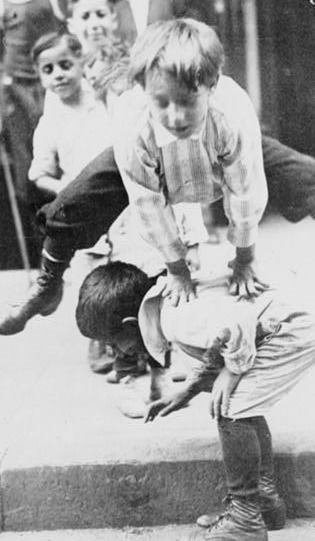
Photo from "Games in the Street", by Rachel Gallagher, 1976

How warped is a society when laws must be passed to ban children from playing in the street? Think about it. Streets make up a large percentage of the total land surface in the city, and they are owned by the public. Should cars have total monopoly on this public resource? As a child I played many summer days in our small residential street. It is the meeting place of all the kids of all ages, and it is within watch of the surrounding houses.

We should be clear about this. This proposed law has nothing to do with the safety of the kids. The playing going on is on small residential side streets. There are already laws against stopping traffic, and no one has claimed that kids are playing in high-traffic areas. The problem is a bunch of whiny old people who can't remember what it was like to play kick the can or pick-up ball. If there is a problem on a specific street, then talk to the kids, or if they are punks, talk to the police, and they use their judgement and will move them on if needed. There is absolutely no need to outlaw all playing in the street. Why not outlaw play on sidewalks, near streets, or all play in public view? Or outlaw kids totally, as they are always yelling, running and generally disturbing the peace with their balls, bats and bikes. I suspect that this law is actually about race and basketball.

Do you want to live in a city in which car speed is encouraged at the expense of play?

22 May 2007

Daniel Ransohoff


At UC, in the mid 1980's, I took a class called Uban Lobbying. It was taught by a man with real passion about Cincinnati: Daniel Ransohoff. His class consisted of him talking about the strengths of the city, about how geographically it was a peneplain, and how we all needed to get out there and meet people and make things happen. Each class, he would bring in a speaker to talk about the history of their company in Cincinnati. Unfortunately, at that time, I wasn't thinking of staying in Cincinnati, and I did not care much about the speakers.

However, Danny was a great personality, with his scarf and hoarse speaking voice, and of course, his passion. I remember towards the end of the quarter, I discovered a bunch of his photos that he had taken in Over-the-Rhine and other inner city neighborhoods in the 40's and 50's. After class, I walked up to him and asked him if he ever took photos of kids in the city neighborhoods anymore and he said something to the effect that food stamps had emphasized starchy foods and made the kids less photogenic.

I beleive his photos are in storage at the Cincinnati Historical Society, in the Museum Center. I wish they were either published, or scanned for ease of browsing. The photo above is a scan of a print I own. I recognize one or two of the buildings. Look close, if you know OTR, you might see where it was taken.

03 May 2007

Games in the Street


What good is playground equipment for children over 5 years old? The padded, plastic and rubberized stuff that Cincinnati Recreation Commission installs is only fun (read: challenging) for children ages 2-5. Then they post a sign that says "this playground intended for children ages 5-12".

What use does a 12 year old have for a three-foot long slide? They would rather be playing on the street like the photo above.

Photo from book "Games in the Street", by Rachel Gallagher, 1976 Brooklyn

30 April 2007

Shooting Craps


Fascinating photo from Cincinnati, 1908
Photo by Lewis Hines, who was documenting the poor living and working conditions of children.
I found the photo at this site.
Posted by Picasa