Showing posts with label safety. Show all posts

23 August 2010

Advice from 'America's worst mom'

There is a new article by Lenore Skenazy. You may remember her when she made a big splash in the news when she let her 9-year-old ride the New York subway home alone. I liked her story, but in the media frenzy that followed she was labeled America's worst mom.

On the Today Show she went on the air to be lectured by a parenting expert. The expert said she could have given her son the same experience by following him, or making him go with a group of people. I really wish she HAD replied this way:
“Well, how is that the ‘exact same experience’ if it’s different?” I demanded. “Besides, he was safe! That’s why I let him go, you fear-mongering hypocrite, preaching independence while warning against it!”
She further commented:
I really think I’m a parent who is afraid of some things (bears, cars) and less afraid of others (subways, strangers). But mostly I’m afraid that I, too, have been swept up in the impossible obsession of our era: total safety for our children every second of every day. The idea that we should provide it and actually could provide it. It’s as if we don’t believe in fate anymore, or good luck or bad luck. No, it’s all up to us.
I also love her observations on TV. I have been known to refer to the nightly news as "Fear TV":
When we watch TV, we have to remind ourselves that its job is to terrify and disgust us so that we’ll keep watching in horror. It is doing an excellent job on both fronts.
She started a blog called Free Range Kids on the topic. I recommend the article and the blog.

On the same day as someone shared a CNN Post about a Toddler walks two blocks to reach medical help for her father. I love the contrast of this story, to all the fear-mongering. It boggles my mind that a 3-year old could have the presence of mind to do that.

11 November 2009

2 Paramedics and 4 Firemen

2 paramedics in an EMS vehicle and 4 men on a fire truck respond every time someone is reported passed out in the park. Doesn't this seem like overkill? Why not just send the paramedic?
 

29 July 2009

Random Stuff Open Thread

I am taking a week or two off (I really mean it this time).

Here are a few parting thoughts:

1. Car seats. Why doesn't Goodwill take car seats, strollers, pack-n-plays? Turns out all car seats have an expiration date 6 years from manufacture. My take is that it is a way to increase seat sales and stuff landfills. I have some seats that are like new, yet apparently they must be thrown in the garbage. There are organized groups that are fighting to make sure old car seats are not re-used. I suppose I can still sell it on Craigslist or leave it on the stoop with a sign saying "free".

2. "Travel narrows the mind" An interesting and somewhat contrary thought that I generally agree with, especially after re-acquainting myself with some of my world-weary old classmates. I learned a lot through some travels I have made, but real learning and real knowledge of "place" comes from a long term study of your home. There is enough learning to last a lifetime in one neighborhood.

3. I am amazed sometimes to what degree people are unaware of their surroundings. when I meet people who don't even realize what political jurisdiciton they live in much less what some native plant species are.

4. Similar thing with people, usually city-born AA's, who are afraid of nature, especially dogs. Yesterday, a life guard at the pool was afraid of a butterfly!?!

5. Any observations?

02 June 2009

Triple Homicide

One downtown parent and her infant son are dead, while another downtown parent mourns her murdered daughter. It truly is an unthinkable tragedy. Parents know what that means. You literally can't imagine the death of your baby because it's just too painful. Trying to imagine another parent's grief is almost as bad.

Now begins the investigative and legal processes which will try to somehow balance this senselessness and set things aright again. We've had a lot of fun using LEGO as a playful proxy for how we would remake our world if imagination were all that mattered. Here's another more serious exploration along that same line.

For some inexplicable reason this design for a LEGO electric chair was rejected. Probably because it didn't include a Joe Deters mini-figure.


Click any pic for larger view. Click HERE for assembly animation.

I remain philosophically opposed to the death penalty. But it sure is difficult to stay committed to that principle when someone shoots a 3 year old and a 9 month old in the head. When it comes time for that particular criminal to receive justice, I'm going to have something (anything) better to do than to protest that execution.

18 February 2009

Libraries May Ban Children


"I don't trust a man who makes toys in a land where children are forbidden."

The Enquirer reports that the Consumer Product Safety Improvement Act will force libraries to either test their children's book collections for lead, or destroy them. Testing can cost $300-$600 per book, and Hamilton County's library system has 1.2 million children's books. Neither choice is really an option for cash-strapped libraries, so the only remaining compliance path would be to simply ban children under 12 from entering.

The Consumer Product Safety Commission notes (pg 4) that they are "not aware of a single documented case" of an ordinary children's book printed after 1985 having a dangerous amount of lead. CPSC has told libraries that they will delay enforcement for a year while they try to make some kind of sense out of the new rules.

I don't think that's possible.

Our society stands to suffer much greater harm from the ban than the scare. Imagine an entire generation of kids forbidden from discovering the magic of books and the dizzying opportunities offered by libraries. It's too stupid to contemplate.

One snide commenter on the Enquirer story said, "let's just outlaw children under 12, that way Congress could solve all of our problems with one simple law." Apparently, that's the plan. No wonder Congress' approval ratings are approaching single digits.

19 January 2009

GPS Locator Writsband for Children

See here for the story. I guess I would be tempted to try something like this when the kids first start going places on their own.

16 September 2008

4 Way Stops Better than Signals

Downtown, we have had no interruption in our phone, natural gas or electric. The water pressure seems to have dropped slightly, and apparently Time Warner Cable is out, but otherwise everything is has been operating fine downtown. Therefore I was a bit surprised to see the total outages when I made a venture out Monday. Luckily I got gas at my regular place on West 8th, because most places were closed in the burbs.

I continue to be fascinated to find that traffic seems to flow fine without traffic lights. I got through all the lights I needed to go through faster when they were functioning as a 4-way stop than I did when they have traffic signals. Of course this would not be true of the busiest, 6-lane intersections, but for your typical 2-lane crossroads, a 4-way stop makes a lot of sense.

There is a movement to remove traffic signals and lines, and it has been successfully implemented in several European cities. Meanwhile, if this subject interests you, see this discussion where it is claimed that 4-way stops are the absolute safest intersection, and that Columbus is considering replacing many signals with stop signs.

BTW, did you know there are over 100 fatal car accident every day in this country?

Also, see this site which compiles average time wasted in traffic.

05 July 2008

Car Seats a Waste of Time and Money

...for kids over 2 years old, that is. I have long suspected this, only to discover that this research came out 3 years ago.

See this article in the NYTimes by the Freakonomics authors.

21 December 2007

Exurb More Dangerous than City

A five year old study I just found says that you are more likely to be killed going about your daily grind in exurbia than you are in older suburb or a city. They used statistics on traffic fatalities and homicides by strangers. These two items combined are higher in the outlying areas than in the urban areas studied. Not the most comprehensive study, but interesting nonetheless.
Leaving home to go to work and other activities is more dangerous for residents of outer suburban areas than for many central city residents and for nearly all inner suburban residents, concludes a recent University of Virginia study.

From Baltimore to Minneapolis to Houston, some sparsely settled outer suburban counties are the most dangerous parts of their metropolitan areas, according to a study by William H. Lucy, professor of urban and environmental planning at U.Va., and graduate research assistant Raphael Rabalais. Their findings are contrary to the conventional wisdom that cities are dangerous and outer suburbs are safe.
...
The study analyzed traffic fatalities and homicides by strangers to test the common belief that outer suburban areas with low-density housing and quasi-rural settings are safer places to live and raise children than cities and inner suburbs.

Potential dangers in any residential location arise from leaving home to travel to work, shop, attend school, attend church, visit friends, or go to civic functions and family gatherings. Tabulating traffic fatalities is the best method of measuring these dangers, the researchers concluded.

They also examined homicides by strangers, because they are the murders most likely to be associated with going about one’s routine business out of the home, and they may be related to proximity to dangerous areas. FBI data indicate, however, that only 17 percent of homicides grew out of felony circumstances, such as robberies and drug law violations, in 1999.
....
Greater danger in fringe locations in metropolitan areas was caused mainly by the large number of traffic fatalities compared with homicides, and the greater difference between traffic fatalities and homicides by strangers.
....

20 December 2007

Spontaneous Community and Crowds

A question from a reader:
" ..I guess that spontaneous sense of community that happens in suburbia – or lack thereof – is one of the biggest fears of moving downtown. Does that make any sense? In other words- is there a large enough group downtown to just bump into each other and hang out, or does it need to be more proactively planned?"

For adults, this is an easy question. The city offers tons more opportunity to just bump into people. We can hardly walk a block without bumping into someone we know at least as aquaintances. This often results in coffee or at least a short conversation. The need for planning get-togethers is more a function of everyone being so busy all the time with their work family juggle, and this is a nationwide problem, not just one that downtowners have.

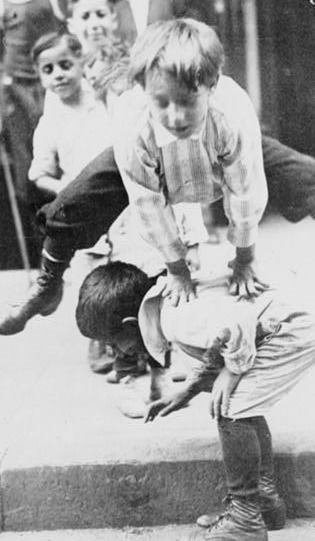
However, for kids, and their unstructured vs structured playtime, the question revolves around the child's "roam space". See a previous post on how kids Roam Space is shrinking. First of all, yes there are lots of kids around. The question is, are they appropriate playmates for your kid without supervision?

Kids do spontaneously get together and play sometimes. We will hang out at the playground for example and meet new kids. My son keeps running into some kid named Anthony, and they immediately get into wrestling and chasing. His grandparents own a store on Walnut and he attends the same school as my son, and they can play anywhere we bump into them, whether the sidewalk or the library. The other chance for spur of the moment play is if other kids of similar ages live in the same building. Fortunately, we do have that situation for my daughter and a neighbor boy.

I think the advantage of the suburb that the reader is thinking about essentially has to do with the safety and relative homogeneity of a neighborhood, which would allow a parent to let the kids roam, and find their own play in the cul-de-sac or amongst the backyards. I think that the cul-de-sac and the yard are less essential in this equation than is the guarantee that the neighbors are child friendly and if the kids they meet are up to your standards.

For example; if on your quiet residential street, the kids all play together after school and the parents do not have to watch their every move, you have a relaxed and peaceful spontaneous play time community. But if you have that same street but one house has drug dealers (as is the case with some suburban friends of mine) then a responsible parent will not allow the kids to go out playing spontaneously.

In the city, we cannot get a homogeneous sidewalk or park, nor do we want it. We do not know who just moved in up the block. However, in a successful city, there is an inherent safety that occurs with the varied number of people out and about.

I would like to make a point here: Safety is found in numbers. Many contemporary Americans are uncomfortable with this idea and prefer safety in isolation, as in a private backyard. However, safety is indeed found in numbers for the simple reason that a great majority of people are trustworthy and responsible citizens. Empty city streets are inherently more dangerous than crowded ones for this sole reason.

I am very confident that if my child was in danger, many neighbors would rush to the rescue. In fact I have seen this in evidence many times. A few weeks ago, for example, my son crashed his bike in the park when I was maybe 30 yards away. Two somewhat ragged men stopped and asked my son if he was alright and helped him with his bike before I could get there. This kind of thing happens all the time, even in the poorest neighborhoods. It takes a faith in mankind to live in a city, but you must remember that a crowd of good Samaritans keeps the bad eggs in check. The problem in many American cities is finding any kind of crowd at all.

There will come a time, and I am not sure what the age will be, when my son will go to the pool or the corner store on his own. What age do parents in the suburbs allow this to occur now? In the 70's I left the sight of my parents for hours on end at age 10. Do parents still allow that? Is it even allowed by law? I really don't know.

Obviously kid's lives are much more structured than they were when we were growing up. This is true if you live in the suburbs or the city. Between work, school, homework, sports, scouts, music lessons, etc etc, when do kids get to just play anymore?


03 December 2007

Kids in Cities Concept Paper

In this entry, I will attempt to summarize the Kids in Cities Concept Paper, which can be read in full here. PDF here.

First they establish the obvious, which is the value of more children in cities. They summarize that Parents and Children:
1. Add to the vibrancy and diversity
2. Are strong advocates for amenities
3. Strengthen the ecosystem of civic-minded citizens
4. Add to the tax base
5. Grow the future urban citizens.

Then they discuss how most cities have been losing families for the past 50 years and how many of them have become virtual kid-free zones. The project is about how to reverse this long-term trend.

Then they divide parents into the following subgroups:
 

The misleading part about this diagram is the equal size of the squares, because the suburban loyalists probably make up a great majority of all parents in the US. But it does serve the purpose to understand the potential targets, and the target of the paper, is how to attract the swing vote. I don't like the term Urban Pioneer, and think Urban Loyalist is a better description for the current city parents.

The urban loyalist values: diversity, density and vibrancy.
The swing vote values: space, safety and schools

Space, Safety and Schools must be addressed to attract the swing vote. An extensive study was made of existing urban loyalists, and a lot of attention was paid to their “pain points” and their “work-arounds”. Finally they propose ways to change these duct-tape solutions into opportunities.

Redefinition is one strategy. For example:
• Safety: Majority perceive the city as unsafe, however the density and diversity of people provide many eyes on the street, and children are kept safe by the many people they know in the neighborhood.
• Space: Apartments are expensive compared to half-acre lot in suburbs, however cities offer many adjacent spaces used to extend the home. The entire city is my backyard!
• Schools: City schools perform badly; however, the city offers many out-of –the-classroom learning experiences. The entire city is my classroom!


Some concepts leaders could start to implement:

SAFETY
Messaging: Safe routes can be established and marked, and businesses can be certified as child friendly.
Services: A simple pre-paid card could allow children a network of safe travel on public transit or even taxis. Child-only areas can be established near the driver of buses and trains.

SPACE
Private Space
- flexible space apartments
- older generation can act as a network of providers that swing vote trusts
- time share model for shared spaces or shared sitters or nannies.

Public Space
- car free zones for safe play
- happy hour for families
- stroller lockers, family rest stops
- k-games, interactive kiosks with scavenger hunts, mazes, city history

SCHOOLS
- Website or school liaison should consolidate school information.
- Help children become involved in shaping their community. Families could network via web to search for learning and volunteer opportunities for children. In this effort children will learn real-life lessons.
- Cities have a concentration of experts in certain fields and each city has certain strengths that could be utilized. For example, architects run a program “architecture for kids” that utilized the buildings around them.

I guess I was surprised that the paper did not discuss the things you most commonly hear such as bike trails, parks, affordable housing, daycare, afterschool care, more neighborhood policing etc. I thought the first half was excellent as it reviewed the current strengths of city life vs the growing weakness of suburban life (alienation, less safety, car issues etc). The proposed concepts were a bit underwhelming. I agree with the ideas, but there was nothing revolutionary here. Maybe that is the point. Small adjustments could make life better for us while also signaling to swing voters that they are wanted.

24 August 2007

Sex Offender Limits - Going Too Far?

I get an email almost everyday notifying me that a person convicted of sexual offense has moved into my neighborhood. Most of the offenders, have a listed address of 115 W. McMicken, which is the location of the Pogue Rehabilitation Center, a treatment facility for hard-to place male offenders, operated by the VOA. A few are at various apartments or at the Drop-Inn-Center, and a few are listed as residing at the Justice Center. I think I get notified of any offender that lives within one mile. You can sign up for this notification service at the Hamilton County Sheriff's site.

I appreciate the notification, as it gives neighbors a heads-up on a potential threat, however I feel that the restrictions on where these people can live is beginning to get overly restrictive:

Ohio bars registered sex offenders from living within 1,000 feet of a school. But many city leaders have said that isn't tough enough.

Some have extended the buffer zones to 2,500 feet — about a half-mile — and added parks, preschools and other places to the restricted list.

One argument against the most restrictive bans is that sex offenders will simply stop registering or say they have moved somewhere else.


In my opinion, registration of these type offenders is a good idea. Increasing the distance they must be from schools, parks and daycares is unnecessary and could be counter productive.

There is another argument made by people who live closer to the Pogue Center than me that it is a deterrent to development and holds down property values. They also say that they attract placement of offenders from other places across Ohio. All this is true, but I don't really know what the solution, is.

UPDATE: Interesting site that combines all the sheriff's info into one searchable map. hat tip Jackie Danicki.

17 August 2007

Crocs get stuck in escalators


It is not just heresay. Here is a picture of crocs that recently got mangled in an escalator.

19 June 2007

Children "roam" space shrinking


Article in a UK newspaper

"I was able to go out quite freely - I'd ride my bike around the estate, play with friends in the park and walk to the swimming pool and to school," said Mrs Grant, 36.

"There was a lot less traffic then - and families had only one car. People didn't make all these short journeys."

Today, her son Edward spends little time on his own outside his garden in their quiet suburban street. She takes him by car to school to ensure she gets to her part-time job as a medical librarian on time.

While he enjoys piano lessons, cubs, skiing lessons, regular holidays and the trampoline, slide and climbing frame in the garden, his mother is concerned he may be missing out.

She said: "He can go out in the crescent but he doesn't tend to go out because the other children don't. We put a bike in the car and go off to the country where we can all cycle together.

"It's not just about time. Traffic is an important consideration, as is the fear of abduction, but I'm not sure whether that's real or perceived."

She added: "Over four generations our family is poles apart in terms of affluence. But I'm not sure our lives are any richer."

11 June 2007

Raising Children in Captivity

A BBC article laments that parents don't let their children out to play with freinds:

Adrian Voce, from the Play England project, said it was unfair to blame parents as they only had their children's well-being at heart.

"Compared to the well-being derived from being out and about and socialising and growing and developing, weighed up against real threats to your child's safety - real or perceived threats - it's a no-brainer for parents," he said.

"They'd rather their child was short of a few friends and over-weight than dead on the road."

We are rearing our children in captivity - their habitat shrinking almost daily.

In 1970 the average nine-year-old girl would have been free to wander 840 metres from her front door. By 1997 it was 280 metres.

Now the limit appears to have come down to the front doorstep.

"You might get kidnapped or taken by a stranger," says Jojo.

"In the park you might get raped," agrees Holly.

Don't they yearn to go off to the woods, to climb trees and get muddy?

No, they tell me. The woods are scary. Climbing trees is dangerous. Muddy clothes get you in trouble.

26 May 2007

This Play Unit Designed for ....


Our local "play unit" is in terrible condition. The small plastic slide is punctured by a post, because some really big kids jumped on the end of it. There are some metal poles around that I think once were play structures. Today, there were some adults drinking out of brown paper bags and lots of hot cheetos wrappers laying around, and no kids.

But when the kids are playing on it they are mostly 2-5 years old, with some 6 and 7 years olds stopping by for a quick slide. Is the sign for liability purposes? Apparently that is why we no longer have see-saws and merry-go-rounds...

25 May 2007

Why young families leave the city


Join host Carol Coletta for a look at the trends and ideas shaping our cities. Only on public radio.


Smart City, an NPR type radio show out of Memphis, had a show today on Kids in Cities. The guests first stated that their study was limited to parents who are middle class (those who had choices on where to live). Then, they divided this group into 4 types of parents:

1. Parents dedicated to the city who would never live in the suburbs.
2. Parents dedicated to the suburbs who would never live in the city.
3. Parents in the city who may move to suburbs as they grow a family.
4. Parents in the suburbs who are dissatisfied and may move to the city.

They continued to discuss how to attract those in the latter 2 groups, especially #3, (retaining those already here). They believe the key issues are:

1. Safety
2. Space
3. Schools


I might also list:

4. Herd mentality: Regularity, homogeneity, dependability of suburbs.
5. Cars: People cannot disconnect from the necessity for all activities to involve driving. Also: cars are still required in most cities and keeping a car here is more difficult.

I think the three main issues are extremely important for retaining families, and I plan on discussing each one in successive posts.

16 April 2007

Jane Jacobs quote #1

It is futile to try to evade the issue of unsafe city streets by attempting to make some other features of a locality, say interior courtyards, or sheltered play spaces, safe instead. By definition again, the streets of a city must do most of the job of handling stangers for this is where strangers come and go. The streets must not only defend the city against predatory strangers, they must protect the many, many peaceable and well-meaning strangers who use them, insuring their safety too as they pass through. Moreover, no normal person can spend his life in some artificial haven, and this includes children. Everyone must use the streets.

-from The Death and Life of Great American Cities, page 35-36.