02 April 2009

Jim Webb Courage

During last year's presidential election, you may recall that I briefly was speculating that Obama would choose Jim Webb as a running mate. I find the guy fascinating. Lately he has been championing the very unpopular issues of prison reform and drug de-criminalization. In a political climate in which most politicians fall all over each other trying to be tougher on crime, Webb is an anomoly.

Criminal justice reform has never been much on my radar, but starting with the jail tax issue last year and continuing to the Pogue Center controversy, I have to say my interest is definitely growing. For example, I was under the impression that the Pogue Center was a locked facility in which offenders serve mandatory time. But apparently that is not how it works at all. Their doors are not locked. This is a bit disconcerting, since they are just a block away from a public swimming pool that we attend often.

Then there is the fact that our Sheriff, Simon Leis, recently closed a minimum security prison in Queensgate, to little noticeable effect. It seems to me that one reason the jail tax failed last year was that it had little specifics in it other than a new jail would be built on the Kahn's site. If the plan had specifics about building and running more secure halfway houses and sex offender rehabilitation programs, maybe it could pass.

Here are some excerpts from Jim Webb's speech on the Senate floor last week:

...We have 5% of the world's population; we have 25% of the world's known prison population. We have an incarceration rate in the United States, the world's greatest democracy, that is five times as high as the average incarceration rate of the rest of the world. There are only two possibilities here: either we have the most evil people on earth living in the United States; or we are doing something dramatically wrong in terms of how we approach the issue of criminal justice. . . .

... a significant percentage of those incarcerated are for possession or nonviolent offenses stemming from drug addiction and those sorts of related behavioral issues. . . .

...there are stunning statistics with respect to drugs that we all must come to terms with. African-Americans are about 12% of our population; contrary to a lot of thought and rhetoric, their drug use rate in terms of frequent drug use rate is about the same as all other elements of our society, about 14%. But they end up being 37% of those arrested on drug charges, 59% of those convicted, and 74% of those sentenced to prison by the numbers that have been provided by us. . . .

Another piece of this issue that I hope we will address with this National Criminal Justice Commission is what happens inside our prisons. . . . We also have a situation in this country with respect to prison violence and sexual victimization that is off the charts and we must get our arms around this problem. We also have many people in our prisons who are among what are called the criminally ill, many suffering from hepatitis and HIV who are not getting the sorts of treatment they deserve.

Importantly, what are we going to do about drug policy - the whole area of drug policy in this country?

And how does that affect sentencing procedures and other alternatives that we might look at?

01 April 2009

Jane's Walks

Groups around the country and the world are planning neighborhood walks in the spirit of Jane Jacobs on May 2nd and 3rd.

Pre Auto Street Film

This is similar to the 1901 NY Edison video posted on this blog last year. This one is a film made from a streetcar as it passes through the streets of Barcelona in 1908. Like the Edison film, there are a handful of cars, but this one has lots more bicyclists. It is really a sweet seven minute film:

One odd thing I saw was that it appears that some street trees are planted on the street side of the curb.

Found via Treehugger.

Standardized Testing Out of Control

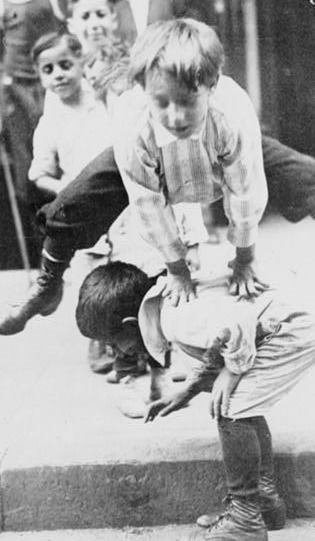
First they started eliminating recess so that they could concentrate on increasing test scores. Now I read that many schools are testing Kindergartners! I think this kind of pressure is really bad policy. Kids can naturally learn to read. Forcing tasks that they are not ready for is detrimental.
...the kindergarten curriculum is what used to be the first-grade curriculum,” ...“What evidence do we have that this pushing is beneficial? While some children can handle the pressure, others cannot. One of my daughters struggles to keep up and hates school.”

...“In order to prepare kids ahead of time for the state tests, hard core curriculum must start in kindergarten. Our kids are not actually getting smarter. The scores are not increasing. And the rates of children with anxiety issues are increasing rapidly.”

...standardized testing and test prep have become daily activities in many public kindergartens. Teachers say they are under pressure to get children ready for the third-grade tests...

The findings are documented in a new report, Crisis in the Kindergarten: Why Children Need to Play in School, released on March 20 by the nonprofit Alliance for Childhood. The authors, ... say that kindergarten testing is “out of control.”

...“Rigid testing policies do not make sense in early childhood education,” states the Alliance for Childhood report. “Standardized testing of children under age eight, when used to make significant decisions about the child’s education, is in direct conflict with the professional standards of every educational testing organization.”

...“The vast majority of kindergarten teachers now spend some time each day on testing and test preparation, an activity that would have been considered irrelevant and even harmful in the past.”

...a kindergarten teacher in Zanesville, Ohio, wrote to her local paper, “All we are doing is stealing childhood from innocent children. Shame on our government for making us be thieves. Shame on them for not listening to what children really need.”

...Long-term studies suggest that the early gains fade away by fourth grade and that by age 10 children in play-based kindergartens excel over others in reading, math, social and emotional learning, creativity, oral expression, industriousness, and imagination....