Showing posts with label friends. Show all posts

01 May 2008

Thick Skin Required in City

I posted a poem yesterday about the anonymous people we pass on the street each day, not because it was a great poem, but because it expressed an important sentiment about city life. Namely that we may not know each other, but we are important to each other.

Now depending on what neighborhood we are in and how well known we are in that neighborhood the dynamics of walking down the street can vary dramatically.

Having lived in my neighborhood for many years, it is hard for me to step out of the door without having to commence some small talk with a neighbor. Sometimes that is a joy, sometimes if I'm running late, it is annoying. I think one attribute of a great neighbor is their ability to show genuine friendliness without talking for a long time. Sometimes, just a wave is nice.

But the great majority of passersby on the street are complete strangers and of course this is more true the further away from home we are or the bigger the city. I think one thing that turns suburbanites off to the city life, is their inability to deal with strangers.

You don't need to be nice to every stranger. God knows they won't all be nice to you. Some people will even give you an evil eye or curse you. My advice is to have a thick skin. If someone is rude to you, do NOT take it personally, and do not respond in kind. Rude people are like other kinds of pollution, an irritant that you shouldn't let ruin your day.

One local blogger recently wrote about how many people he meets on the street who are friendly:

...I would nod my head and say "Hey, hows it goin?" If they acknowledge me with a response, a nod, anything but a cold stare, they went down on the "friendly" side of my counter. If they just walked by or ignored me, I clicked em in on the "unfriendly" side of the counter ... by the time I had hit Liberty, I had encountered 126 people, and had 71 positive responses. I had 5 conversations for a few minutes, and shook a few hands as well.

11 June 2007

Raising Children in Captivity

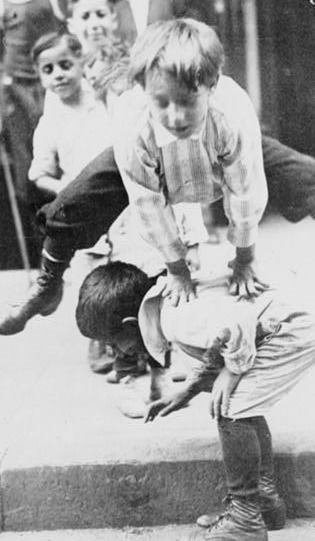
A BBC article laments that parents don't let their children out to play with freinds:

Adrian Voce, from the Play England project, said it was unfair to blame parents as they only had their children's well-being at heart.

"Compared to the well-being derived from being out and about and socialising and growing and developing, weighed up against real threats to your child's safety - real or perceived threats - it's a no-brainer for parents," he said.

"They'd rather their child was short of a few friends and over-weight than dead on the road."

We are rearing our children in captivity - their habitat shrinking almost daily.

In 1970 the average nine-year-old girl would have been free to wander 840 metres from her front door. By 1997 it was 280 metres.

Now the limit appears to have come down to the front doorstep.

"You might get kidnapped or taken by a stranger," says Jojo.

"In the park you might get raped," agrees Holly.

Don't they yearn to go off to the woods, to climb trees and get muddy?

No, they tell me. The woods are scary. Climbing trees is dangerous. Muddy clothes get you in trouble.

30 May 2007

Privacy in the city

Jane Jacobs spends a lot of time writing about the need for the city to accommodate strangers. When I first read this, I thought she was giving too much attention to a minor topic. I mean, you can always pull your shade, right? But the longer I live in the city, the more I see that the issue is much deeper than that.

People want the freedom to become friends with only the people they choose. They do not want to share all their private lives with all the neighbors. A good city neighborhood allows people to know lots and lots of acquaintances, but importantly allows those people to also have private lives.

Perhaps I am being to abstract to make much sense, so I will try an example:

The playground. At a well designed and well-attended playground, your child can meet and play with lots of other kids, and if you wish you can strike up a conversation with other parents, while they sit in the shade and watch; or you can sit and mind your own business. However, if play is limited to private areas such as yards, courtyards, or even to inside, then the parents are forced closer than they want to be to the other families. Families in this situation may choose to stay isolated, rather than open their private space to all kinds of strangers.

Residents of small towns, are forced to be intimate with neighbors. This could be good, but it could also be bad. See, I would rather choose who I become intimate with.

Suburbanites have the choice of following their little kids to the neighbors yard, (if you want to supervise them), or you can drive them to the local park to play. The real result of this arrangement is that families pick neighborhoods that are full of people very similar to themselves. Then, forced intimacy is more likely to be ok.

The advantage of city life is the huge variety and degrees of friendships that are available. Because you are not forced into intimacy with everyone, the range of people you feel comfortable living next to is much more diverse.

04 May 2007

Social networks of children strengthen neighborhoods

Contrary to popular opinion, children play a key role in strengthening local communities and making people feel safe in their neighbourhoods, according to a study funded by the Economic and Social Research Council (ESRC).

Much panic today about childhood in urban areas is based on a very partial picture, argue the authors...(whose) report challenges previous theories that social networks are largely determined by parents. According to the evidence they found, children are active - both indirectly and directly – in forging neighbourly relationships and connections for their parents.
...
They found that the more parents were involved in the lives of their neighbours, the more freedom they gave their children. At the same time, the more social networks children have in a neighbourhood, the greater parents’ confidence in the safety of that area.

Many parents questioned were often torn between wishing to protect their children and wanting them to be streetwise.